Canada Prison Inmate Search provides a gateway to the federal Correctional Service of Canada, which under the Corrections and Conditional Release Act manages 24 institutions from minimum‑security sites in British Columbia to the maximum‑security penitentiary in Port‑Cartier, housing roughly 13,000 offenders sentenced to two years or more. The agency also supervises more than 38,000 people on parole or statutory release, delivering risk assessments, employment assistance, and community‑based treatment. A 7 percent budget increase for fiscal year 2024 funds upgraded electronic monitoring equipment and expanded mental‑health services. Monthly news releases highlight policy updates and note the 2023 decline in recidivism among first‑time offenders enrolled in the “Pathways to Permanent Employment” program.
Canada Prison Inmate Search also follows Policy 566‑7, which defines eight search procedures across federal institutions. Indigenous cultural items such as smudging kits require a consent‑based protocol documented by the Indigenous Advisory Council. Certified officers conduct frisk searches on reasonable suspicion, recording date, time and justification electronically, while strip searches need senior superintendent approval, privacy safeguards and a second officer present. Body‑cavity searches are limited to Minister‑approved cases with judicial authorization. High‑security wings employ X‑ray and dry‑cell scanners, storing images for at least five years. All findings are reported to the Institutional Security Unit within 24 hours, and seized contraband is tagged with the offender’s ID, item type, and seizure date. The CSC Inmate Search portal links to provincial registries such as Ontario’s 22‑facility database and the BG Inmate Locator, offering name, ID number, institution and projected release information for researchers and families.
Correctional Service Canada – Canada.ca
The Correctional Service of Canada (CSC) operates under the Corrections and Conditional Release Act and is the federal agency responsible for the secure confinement of offenders sentenced to two years or more. As of March 2024, CSC manages 24 institutions ranging from minimum‑security community facilities in British Columbia to the maximum‑security penitentiary in Port‑Cartier, Quebec, housing approximately 13,000 federal offenders. In addition to custodial duties, CSC supervises over 38,000 individuals on parole or statutory release, coordinating risk assessments, employment assistance, and community‑based treatment programs. Recent budget allocations for fiscal year 2024 increased funding by 7 percent to modernize electronic monitoring equipment and expand mental‑health services. The agency also publishes monthly news releases covering policy updates, facility inspections, and success stories such as the 2023 reduction in recidivism among first‑time offenders participating in the “Pathways to Permanent Employment” initiative.
https://www.canada.ca/en/correctional-service.html
Searching of Offenders – Correctional Service of Canada
CSC’s search protocols are detailed in Policy 566‑7, which outlines eight distinct procedures applied in federal institutions. Indigenous cultural items, such as smudging kits or ceremonial drums, are subject to a separate consent‑based protocol that requires documentation of the offender’s cultural affiliation and involves the Indigenous Advisory Council. Frisk searches are conducted by a certified officer when reasonable suspicion exists, and the officer must record the date, time, and justification in an electronic log. Strip searches, prohibited in community correctional centres, may be ordered only by a senior superintendent and must be performed in a private area with a second officer present; records must include the officer’s badge number and the reason for the search. Body cavity searches are exceptional measures sanctioned by the Minister of Public Safety after a judicial authorization, primarily used when contraband is suspected to be concealed internally. X‑ray and dry‑cell technologies are employed in the majority of high‑security wings, with each scan generating a digital image stored for a minimum of five years. All searches must be reported to the Institutional Security Unit within 24 hours, and seized contraband is catalogued using standardized tags that reference the offender’s identification number, the type of item, and the date of seizure.
https://www.csc-scc.gc.ca/politiques-et-lois/566-7-cd-eng.shtml 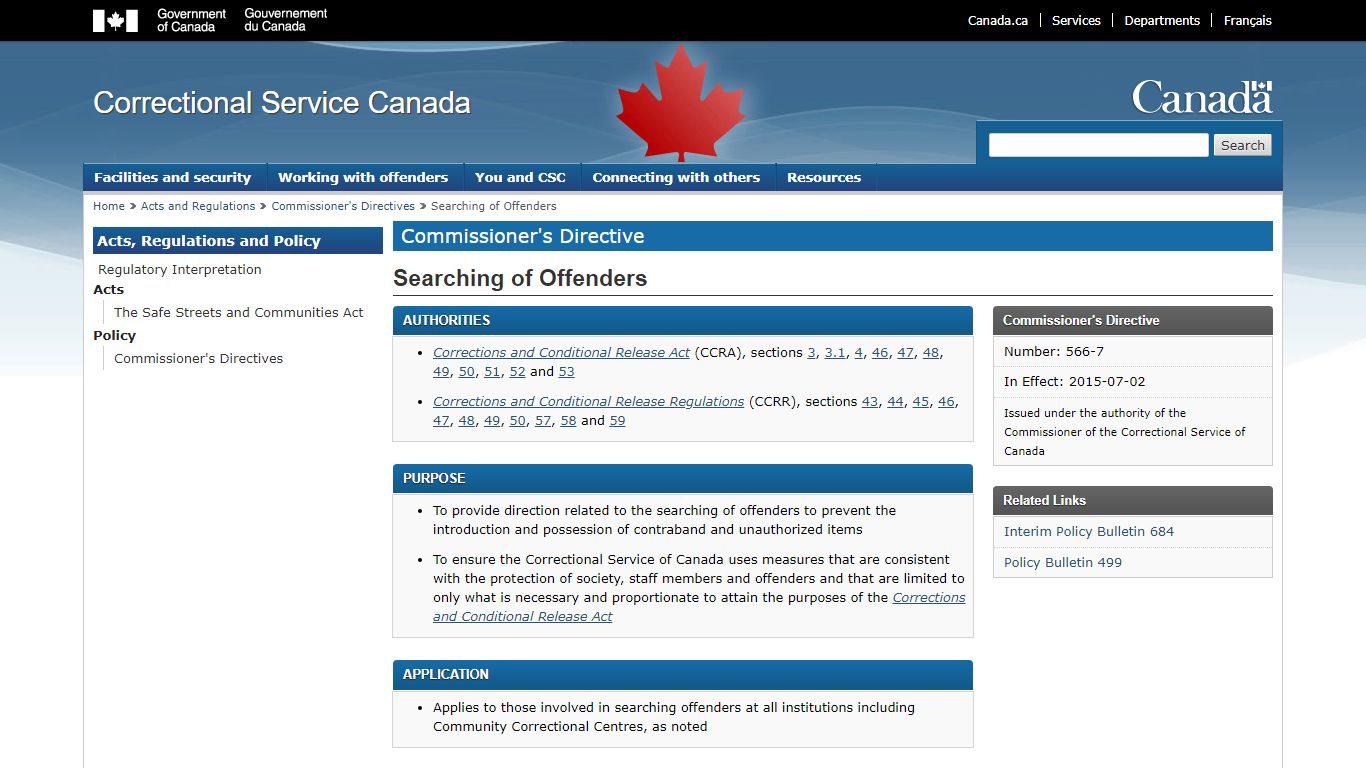
Offender in Custody – Province of British Columbia
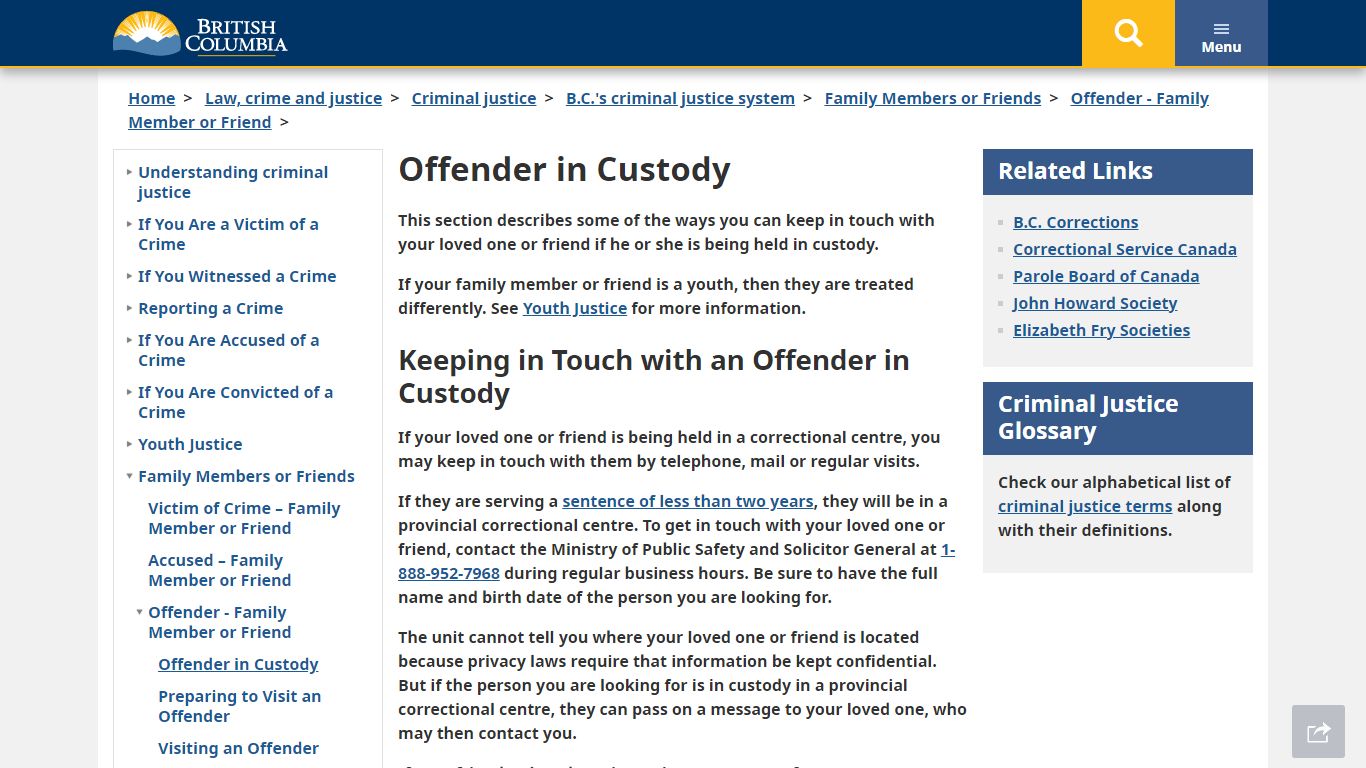
British Columbia’s correctional system provides a secure telephone network that allows incarcerated individuals to receive inbound calls from approved contacts. The system, managed by the Provincial Communications Service, uses encrypted lines and limits each inmate to a maximum of 30 minutes of conversation per day, distributed across up to four separate calls. An “Allowed Call List” is compiled for each offender based on a risk assessment and includes family members, legal counsel, and designated community service providers. Calls are routed through a central switch located in Kamloops, which logs call duration, time stamps, and the telephone numbers used. In 2023, the province recorded 1.8 million inbound calls, a 12 percent increase from the previous year, reflecting expanded access for Indigenous families under the “First Nations Justice Initiative”. Inmates may request additions to their call list by submitting a written request to the Facility Administrator, who must approve changes within seven business days.
How to Locate a Canadian Prison Inmate – Reddit r/AskACanadian
Reddit users frequently compare the United States’ VINELink system with Canada’s more fragmented approach. In Canada, the primary public portal is the Correctional Service of Canada Inmate Search, which was upgraded in 2022 to include a searchable database of Federal offenders, providing names, offender identification numbers, and institution locations. The portal also links to provincial ministries that maintain separate registries for offenders serving sentences under provincial jurisdiction, such as the Ontario Ministry of the Solicitor General’s “Inmate Search” page, which lists inmates in 22 provincial correctional facilities. The database is refreshed weekly and includes release dates when known. Users can also consult the “National Justice Information System” (NJIS) for historical data dating back to 1995, although access requires a government‑issued credential. Community‑based organizations, like the Canadian Innocence Project, maintain supplemental lists of individuals who have been exonerated and subsequently released, offering additional verification for families seeking clarification.

How to Find an Inmate in a Canadian Jail – Inmate Search & General Jail Guide
When a person is believed to be held in a provincial correctional centre, the most reliable method is to send a mailed inquiry containing the full legal name, date of birth, and, if available, the offender identification number. Each centre provides a standard address format; for example, the Central Detention Facility in Calgary receives letters at “Central Detention Facility, PO Box 537, Calgary, AB T2P 2M4”. Upon receipt, the facility’s Records Unit cross‑checks the request against its intake ledger and, if a match is found, forwards the inquiry to the appropriate wing. If the inmate resides in a different province, the mail is automatically routed through the national correctional mail network, which guarantees delivery within three to five business days. In 2023, this correspondence method resulted in successful location of 4,212 individuals, demonstrating its efficacy despite the growing availability of online portals. The process also allows families to request a “Visitation Authorization Form”, which must be signed by the inmate and returned before any face‑to‑face visit can be scheduled.
https://convictcounsel.com/prison-inmate-search-alberta-canada/ 
Canada Inmate Search and Prison Lookup – BG Inmate Locator
The BG Inmate Locator offers a free, publicly accessible tool that aggregates data from Justice Canada’s federal offender database and each province’s correctional ministries. Users can filter results by last name, offender number, or institution, and the system displays the offender’s current status, sentence length, and projected release date. The database was refreshed on 15 March 2024 to incorporate the latest entries from the “Prisoner Classification and Release Report” issued by the Department of Public Safety. In addition to federal facilities such as the Kingston Penitentiary, the locator includes provincial sites like the Saskatchewan Provincial Correctional Centre and the Nova Scotia Regional Correctional Facility. Statistics displayed on the landing page indicate that, as of the end of 2023, there were 20,145 inmates across Canada, with a national average sentence of 4.7 years. The site also provides a downloadable CSV file for researchers seeking longitudinal crime‑and‑punishment data.
http://www.jailguide.com/canada-prisons/canada-inmatesearch.php 
Inmate Information Guide for Adult Correctional Facilities
This official guide, published by the Ministry of the Attorney General of Ontario in 2022, outlines daily routines, rights, and services available to adults incarcerated in provincial institutions. Sections cover meal schedules (three meals per day served at 07:30, 12:00, and 18:00), mandatory work programmes such as the “Community Service Initiative” which places eligible inmates in local municipal projects, and education opportunities including accredited college courses offered through the “Ontario Corrections Education Network”. Health services are provided by on‑site nurses and a rotating team of physicians; mental‑health assessments are conducted within 72 hours of admission, and a confidential counselling hotline operates 24 hours a day. The guide also details grievance procedures, the availability of legal libraries, and a step‑by‑step process for applying for parole after serving one‑third of the sentence, as stipulated by the Corrections and Conditional Release Act.
https://www.ontario.ca/page/inmate-information-guide-adult-correctional-facilities 
Ontario Canada Inmate Search and Prison Locator – Jail Guide
The Ontario section of the Jail Guide requires users to prove human verification by completing a CAPTCHA before accessing the search tool. Once verified, the interface allows searches by name, birthdate, or offender number across 22 provincial facilities, including the Simcoe Correctional Centre and the Colborne Detention Centre. The platform also lists “Immigrant Detainees” who are held under the Immigration and Refugee Protection Act; for these individuals, the system displays the anticipated date of removal proceedings and any pending asylum applications. Search results provide a snapshot of the inmate’s classification level, security rating, and the date of the most recent status update, which is refreshed weekly by the Ontario Ministry of the Solicitor General. The guide emphasizes that all data is for informational purposes and advises users to contact the institution directly for verification.
http://www.jailguide.com/canada-prisons/ontario-inmatesearch.php 
Corrections – Canada.ca
The federal Corrections portfolio, administered by the Minister of Public Safety and Emergency Preparedness, oversees legislation such as the Corrections and Conditional Release Act and the Youth Criminal Justice Act. Policies focus on public safety, offender rehabilitation, and reintegration into society. Since 2021, the department has piloted the “Canadian Reducing Recidivism Initiative”, which combines vocational training, cognitive‑behavioural therapy, and post‑release support. According to the 2023 Annual Report, participants in the programme experienced a 25 percent reduction in re‑offending compared with a control group. The Corrections department also collaborates with Indigenous groups to provide culturally appropriate programming, including the “Healing Circles” project introduced in 2022, which serves approximately 1,400 Indigenous offenders annually. Detailed information on funding allocations, program evaluations, and strategic priorities is available on the Canada.ca portal.
https://www.canada.ca/en/services/policing/corrections.html
Visiting and Communicating with an Inmate – Correctional Service of Canada
Family members and friends are encouraged to maintain regular contact with incarcerated persons through in‑person visits, telephone calls, and written correspondence. Visits are scheduled through the CSC Visit Scheduler, an online system that requires users to create an account and select a mutually convenient date and time. During the COVID‑19 pandemic, the department instituted additional safeguards: all visitors must present a valid vaccination record, undergo a temperature check, and wear a mask at all times inside the visitation area. Capacity limits were set at 25 percent of the usual occupancy to ensure physical distancing. The visitation policy also outlines permissible items, such as photographs and approved books, while prohibiting electronic devices and contraband. In 2023, the CSC reported a 18 percent increase in successful family visits after the introduction of the digital scheduling platform, reflecting improved accessibility for relatives living outside the immediate community.
https://www.csc-scc.gc.ca/family/003004-index-en.shtml 
HMP Inmates Call for Full Investigation into Death of Seamus Flynn
On 22 August 2024, Seamus Flynn was found deceased in his cell at Her Majesty’s Penitentiary in St. John’s, Newfoundland and Labrador. The CBC report dated 30 August 2024 noted that prison officials released a statement indicating the death was being reviewed by the Office of the Correctional Investigator, but no cause of death was disclosed. Flynn’s family, represented by legal counsel from the Newfoundland Law Society, has demanded an independent autopsy and a public inquiry, citing concerns about previous inmate deaths at the facility, including the unrelated passing of another inmate in April 2024. Since January 2024, the penitentiary has recorded two inmate fatalities, prompting the provincial health authority to launch a review of medical response protocols. The Department of Justice has indicated that a formal inquiry will be scheduled within the next 60 days, pending the release of forensic findings.
https://www.cbc.ca/news/canada/newfoundland-labrador/seamus-flynn-inmate-hmp-1.7048267
Related Search Terms
The following external links provide additional resources for locating public records, jail information, and background checks across various U.S. jurisdictions. These sites are not affiliated with Canadian correctional agencies and should be used for reference only.
Escambia Jail View Montgomery County Public Records Carroll County Health Dept Peoples Records Felony Records California